
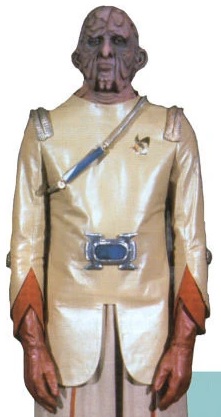
 Arcturians are not manufactured soldiers
They are a naturally evolved clonal species, the result of a planetary ecological collapse that wiped out sexual reproduction several thousand years ago.
Their cloning is:
biological necessity, not political choice
culturally normalised, not militarised,
medically sophisticated, not ethically suspect
deeply personal, not depersonalising
This makes them the Federation’s leading experts in genetics, epidemiology, and biological continuity — and explains why so many Arcturians serve as doctors, researchers, and science officers.
How Their Planet Lost Sexual Reproduction
Core premise
Arcturians are not manufactured soldiers.
They are a naturally evolved clonal species, the result of a planetary ecological collapse that wiped out sexual reproduction several thousand years ago.
Their cloning is:
biological necessity, not political choice
culturally normalised, not militarised
medically sophisticated, not ethically suspect
deeply personal, not depersonalising
How Their Planet Lost Sexual Reproduction
Arcturia suffered a catastrophic biosphere event:
a fungal blight that sterilised most higher organisms
collapse of pollinating species
extinction of key reproductive symbionts
atmospheric chemical shifts that disrupted gamete viability
Within a few generations, sexual reproduction became impossible.Their ancestors survived only by developing:
somatic cloning
genomic stabilization techniques
memory-encoded developmental templates
artificial womb ecosystems
This forced them into a civilisational pivot: from a sexually reproducing species to a clonal one.
Cultural Consequences: Identity Without Ancestry
1. Clonal lineages replace families
Arcturians belong to Lines, not families.
A Line is:
a sequence of cloneseach generation slightly modified
each inheriting curated memorieseach responsible for maintaining the Line’s continuity
Lines are treated with reverence — not because they are “pure,” but because they are fragile.
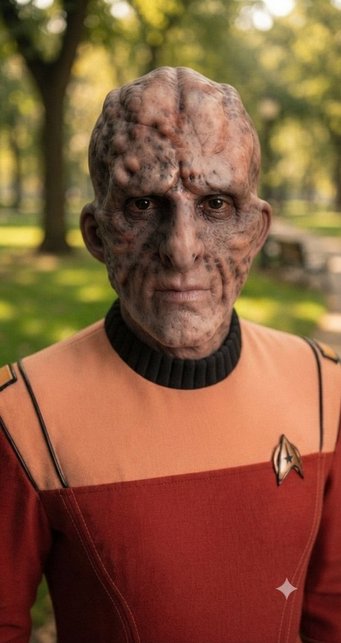 2. Depersonalisation is the existential fear
Arcturians worry not about individuality being erased by cloning, but about:
Lines collapsing
genetic drift destabilizing identity
memory-template corruption
catastrophic disease wiping out entire Lines
This is the “banana problem”:
genetic uniformity makes them vulnerable.
3. Individuality is fiercely protected
Arcturians cultivate individuality through:
divergent education
personal aesthetic traditions
ritualised “identity declarations”
psychological imprinting that encourages variation
They are clones — but never identical.
Why They Become Doctors and Scientists
Arcturia suffered a catastrophic biosphere event:
a fungal blight that sterilised most higher organisms
collapse of pollinating species
extinction of key reproductive symbionts
atmospheric chemical shifts that disrupted gamete viability
Within a few generations, sexual reproduction became impossible.
Their ancestors survived only by developing:
somatic cloning
genomic stabilisation techniques
memory-encoded developmental templates
artificial womb ecosystems
This forced them into a civilisational pivot: from a sexually reproducing species to a clonal one.
Cultural Consequences: Identity Without Ancestry
1. Clonal lineages replace families
Arcturians belong to Lines, not families. A Line is:
a sequence of cloneseach generation slightly modified, each inheriting curated memorieseach responsible for maintaining the Line’s continuity
Lines are treated with reverence — not because they are “pure,” but because they are fragile.
Their entire civilisation is built on:
- preventing extinction
- maintaining biological diversity artificially
- monitoring genomic drift
- developing anti-blight technologies
- studying alien reproductive systems to learn alternatives
This makes them:
- exceptional medical officers
- brilliant epidemiologists
- cautious biologists
- obsessive archivists of biological data
Starfleet loves Arcturian science officers because they treat every species as a miracle — something they themselves nearly lost.
Ethics: Why the Federation Accepts Arcturian Cloning
1. They are not manufactured for a purpose
Arcturians choose their careers. Their cloning is reproduction, not production.
2. They are fully autonomous persons
Every clone is legally and culturally an individual.
3. Their cloning predates Federation membership
The UFP cannot ethically demand they abandon their only method of reproduction.
4. Their cloning is medically necessary
It is equivalent to:
- Betazoid telepathy
- Vulcan neuro-discipline
- Andorian quad-gender reproduction
- Deltan empathic bonding
It is a species trait, not a political program.
Why They Are Not Jem’Hadar
The Jem’Hadar are:
- engineered
- drug-dependent
- socially constrained
- militarily purposed
- denied autonomy
- denied childhood
- denied choice
Arcturians are the opposite:
- self-determined
- biologically stable
- culturally rich
- ethically autonomous
- scientifically oriented
- deeply individualistic
The Federation would never accept a Jem’Hadar-like species it created. But it can accept a species that evolved cloning naturally.
Arcturians force the Federation to confront a profound truth:
Cloning is not unethical. Instrumentalizing cloned people is.
Arcturians embody the ethical version of cloning:
- reproduction without exploitation
- continuity without coercion
- identity without uniformity
- culture without ancestry
- individuality without sexual reproduction
They are living proof that cloning can be:
- dignified
- autonomous
- culturally meaningful
- scientifically extraordinary
Core identity: A Line is a living continuum
An Arcturian Line is not a family, not a caste, and not a clone batch.
It is a continuing organism expressed across multiple individuals over centuries.A Line is defined by:
a curated genomea memory-template archive
a developmental philosophy
a shared aesthetic tradition
a collective responsibility to maintain variation
Arcturians say:“I am myself, and I am my Line.”
This is not metaphor. It is cultural truth.
How Lines form and evolve
Each Line begins with a Founder, the last sexually-born Arcturian before the reproductive collapse.
Every subsequent clone is:
genetically adjusted to reduce drift
psychologically imprinted with Line traditions
encouraged to diverge in personality
responsible for adding new knowledge to the Line archive
Lines evolve like species:
some diversify
some collapse
some merge
some go extinct
some split into sub-Lines
This gives Arcturian society a dynamic, almost ecological structure.
Memory-template inheritance
Arcturians do not pass down literal memories.
They pass down:
emotional heuristics
problem-solving frameworks
cultural instincts
aesthetic preferences
ethical tendencies
These are encoded in neuro-developmental templates.
A new clone awakens with:no memoriesbut a strong sense of “how a member of this Line thinks”
This avoids Jem’Hadar-style conditioning and preserves individuality.
Line aesthetics: identity through variation
Each Line expresses itself through a distinct aesthetic tradition:
colour palettes
architectural motifs
personal ornamentation
ritual clothing
symbolic fractal patterns
preferred musical intervals
These aesthetics evolve with each generation.
Uniformity is considered dangerous — a sign of stagnation.
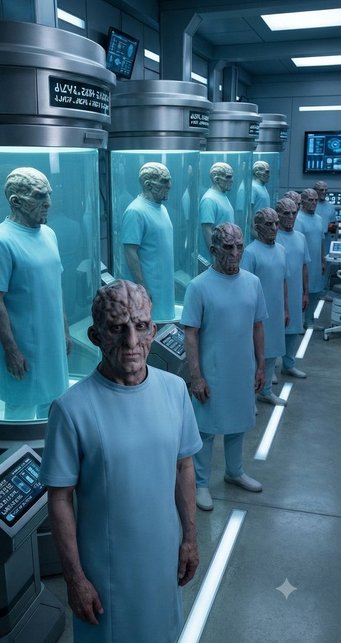 The biological imperative: fight genetic uniformity
Because they reproduce clonally, Arcturians face the banana problem:
a single pathogen could wipe out an entire Line.
Thus, Line culture revolves around controlled variation:
- periodic genomic edits
- immunological diversification
- ritual “variation festivals” where new traits are introduced
- cross-Line genetic exchanges (carefully regulated)
- Line Councils that vote on which traits to preserve or retire
This is why Arcturians dominate Federation medicine and biology — their survival depends on it.
Social structure: The Triad of Continuity
Every Line maintains a Triad, three roles that preserve its identity:
- The Curator — maintains the genome and memory-template
- The Divergent — pushes the Line into new intellectual or artistic territory
- The Anchor — preserves core traditions and stabilises identity
These roles rotate every generation.
This prevents stagnation and prevents any one clone from dominating the Line’s direction
Ethics: individuality as sacred duty
Arcturians believe individuality is the highest moral good, because:
- it protects the Line from extinction
- it enriches the Line’s cultural archive
- it ensures psychological resilience
- it prevents depersonalisation
- it honours the Founder’s legacy
A clone who tries to imitate a predecessor is gently corrected.
A clone who diverges too far is celebrated — but monitored for genomic instability.
Inter-Line politics
Lines interact like nations:
- alliances
- rivalries
- shared research projects
- cultural exchanges
- debates over genomic ethics
- disputes over memory-template purity
Some Lines are conservative, preserving ancient Founder aesthetics. Others are radical, altering their genome every generation.
The Federation sees Arcturian politics as “quiet but intense.”
Arcturians in Starfleet
Arcturians gravitate toward:
- medical divisions
- biology
- epidemiology
- botany
- environmental sciences
- diplomatic analysis
- cultural anthropology
Starfleet values them because:
- they think in long continuities
- they treat biological systems with reverence
- they are calm under existential pressure
- they understand extinction intimately
Their presence is a reminder that life can be fragile and still thrive.
Arcturian Line culture is the Federation’s counter-argument to the Jem’Hadar.
Where the Jem’Hadar are:
- engineered
- uniform
- obedient
- disposable
Arcturians are:
- self-determined
- diverse
- autonomous
- culturally rich
They prove that cloning is not inherently unethical — only instrumental cloning is. Arcturians embody the Federation ideal: life created by necessity, sustained by choice, enriched by individuality.
Arcturian architecture
Arcturian architecture is living continuity: buildings grown, not built; structures that evolve with each generation; spaces designed to preserve individuality while protecting the Line from extinction.It is the opposite of Jem’Hadar utilitarianism — it is a celebration of identity, variation, and survival.
1. Living structures: grown, not constructed
Arcturians use bio-engineered stone-flora, a hybrid of mineral and plant, to grow their buildings.
These materials:
self-repair
adjust shape over decades
regulate temperature
filter air
store Line memory-patterns in their cellular lattice
A building is considered a member of the Line, not an object.
Each generation modifies the structure slightly, creating architectural “growth rings” that historians can read like tree rings.
2. Fractal Line motifs
Every Line has a signature fractal pattern — its aesthetic DNA.
These motifs appear in:
wall lattices
floor inlays
window geometries
roof curvature
bioluminescent light patterns
ceremonial chambers
The fractal evolves each generation, preserving continuity while introducing variation.
This is how Arcturians prevent cultural stagnation: the building itself demands change.
3. Memory-template chambers
Arcturian architecture includes Memory Halls, where Line templates are curated.
These chambers are:
circular
acoustically perfect
lined with living crystal
illuminated by slow-pulsing bioluminescent veins filled with fractal murals representing the Line’s history
The chamber is not a place of worship — it is a place of continuity maintenance.
Arcturians meditate here before cloning a new generation, ensuring the template remains stable.
4. Environmental adaptation
Because their species nearly went extinct from a biosphere collapse, Arcturians design buildings to be ecologically defensive.
Features include:
pathogen-filtering air membranes
humidity-controlled atriums
sealed bio-reactive walls
micro-climate gardens that host symbiotic organisms
anti-blight fungal sensors
genomic drift monitoring stations
Their architecture is a fortress against extinction — but aesthetically serene.
5. Individuality expressed through micro-spacesArcturians fear depersonalisation, so their architecture ensures individuality.
Every building contains:
personal alcoves grown uniquely for each occupant
customisable bioluminescent patterns
adaptive furniture that reshapes to reflect personality.
“identity gardens” where each clone cultivates a unique plant hybrid
private fractal canvases that evolve with emotional states
These micro-spaces are sacred: they prevent psychological homogenisation.
6. Inter-Line districtsArcturian cities are divided into Line districts, each with distinct architectural signatures.
Districts differ in:
colour
geometry
growth patterns
environmental philosophy
memory-template aesthetics
genomic variation strategies
Walking through an Arcturian city feels like walking through a living museum of evolutionary art.
7. Starfleet Arcturian architecture
Arcturians serving in Starfleet modify their quarters to reflect Line aesthetics.
Common features:
- living wall panels
- fractal light patterns
- micro-gardens
- memory-template alcoves
- adaptive furniture
- humidity-controlled air membranes
Starfleet engineers consider Arcturian quarters “the most peaceful spaces on any ship.”
Arcturian architecture is the Federation’s most literal embodiment of IDIC:
- Infinite Diversity
- Infinite Combinations
- expressed through living structures
- evolving fractals
- biological continuity
- and individuality preserved through variation
Where Vulcan architecture expresses logic, and Andorian architecture expresses honour, Arcturian architecture expresses survival through identity.
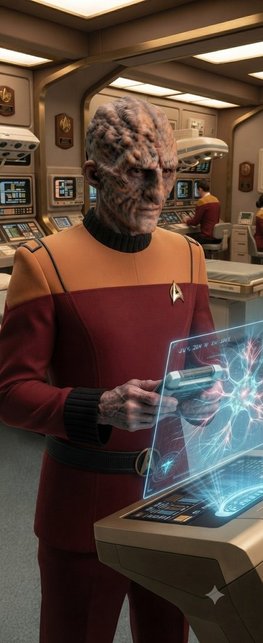 Why Arcturians join Starfleet
Three motivations dominate Arcturian recruitment:
1. Preservation of diversity
Their species nearly died from genetic uniformity.
Starfleet’s mission — explore, catalogue, protect — resonates deeply.
Arcturians see every new world as a lesson in:
- reproductive diversity
- ecological resilience
- evolutionary creativity
They join Starfleet to learn what their own world lost.
2. Continuity of the Line
Serving in Starfleet is considered a Line duty:
- bring back knowledge
- bring back biological samples
- bring back cultural insights
- enrich the Line archive
- strengthen future clones
A Starfleet tour is a generational investment.
3. Preventing extinction elsewhere
Arcturians feel a moral obligation to help species avoid the fate they suffered.
They gravitate toward missions involving:
- planetary collapse
- pandemics
- ecological disasters
- biological crises
- genetic instability
They are the Federation’s quiet “extinction watchers.”
Roles Arcturians excel at
Arcturians cluster in specific Starfleet divisions because their biology and culture make them uniquely suited.
1. Medical Division
They are exceptional doctors because:
- they understand biological fragility
- they treat disease as a moral threat
- they have unparalleled genomic literacy
- they can detect subtle biological drift
- they are calm under medical crisis pressure
Arcturian doctors are famous for saying:
“Every life is a Line.”
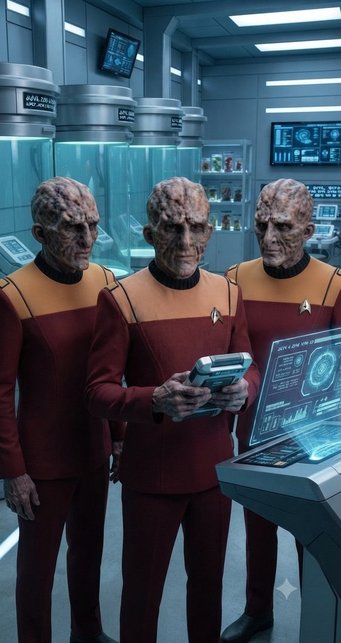 2. Science Division
Arcturians dominate:
- biology
- botany
- epidemiology
- environmental sciences
- evolutionary modelling
- ecology
- reproductive biology
Their labs often include living fractal motifs from their Line architecture.
3. Diplomatic Corps
Arcturians make excellent diplomats because:
- they think in centuries
- they understand cultural continuity
- they value variation
- they avoid absolutism
- they are trained to mediate Line disputes
They are especially effective with species facing demographic or ecological crises.
4. Strategic Analysis / Intelligence (non-covert)
Arcturians excel at:
- long-term modelling
- extinction-risk forecasting
- biosphere collapse prediction
- cultural drift analysis
They are never used as covert operatives — their culture forbids depersonalisation.
Psychological profile of Arcturian officers
Arcturians in Starfleet tend to be:
- calm
- introspective
- emotionally stable
- quietly humorous
- deeply empathetic
- resistant to panic
- obsessed with continuity
- fascinated by diversity
- uncomfortable with uniformity
They dislike:
- rigid hierarchies
- depersonalisation
- mass-produced thinking
- unnecessary violence
- anything that resembles Jem’Hadar conditioning
They thrive in:
- multicultural crews
- exploratory missions
- scientific expeditions
- diplomatic assignments
- medical emergencies
How Starfleet accommodates Arcturians
Starfleet has adapted to Arcturian needs in several ways:
1. Line alcoves in quarters
Every Arcturian officer has:
- a memory-template alcove
- a living fractal wall
- humidity-controlled air membranes
- a micro-garden for identity cultivation
These are essential for psychological stability.
2. Genomic drift monitoring
Starfleet medical systems include:
- drift scanners
- pathogen-risk modelling
- Line-specific immunological profiles
This prevents catastrophic Line collapse.
3. Cultural continuity leave
Arcturians periodically return home to:
- update Line archives
- participate in variation festivals
- undergo genomic recalibration
- contribute new knowledge
This is treated like Vulcan meditation leave or Andorian bonding leave.
How other species view Arcturians
Vulcans
Respect them as “biological logicians.”
Admire their calm and continuity.
Andorians
Find them strange but honourable.
Appreciate their resilience.
Humans
See them as serene, brilliant, and slightly uncanny.
Betazoids
Find their emotional patterns unusually stable.
Klingons
Respect their survival but distrust their cloning.
They call them “the people who refused extinction.”
Romulans
Quietly admire their genomic mastery.
Fear their epidemiological insight.
Arcturians in Starfleet are the Federation’s living reminder of fragility.
They embody:
- the cost of ecological collapse
- the value of diversity
- the danger of uniformity
- the ethics of cloning done right
- the power of continuity
- the beauty of variation
They are the Federation’s counter-argument to the Jem’Hadar: cloning can produce healers, explorers, and diplomats — not soldiers.
 Author's notes:
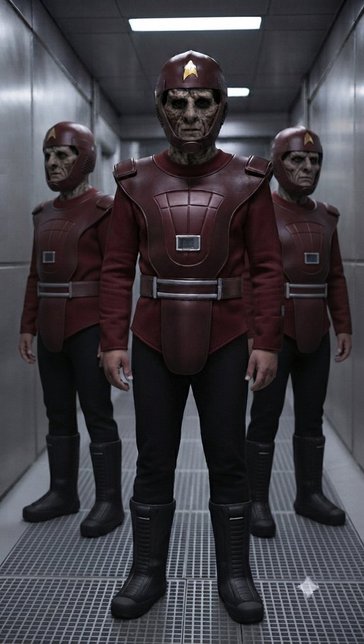
The Arcturian clones are one of Star Trek’s strangest pieces of semi-canon lore: briefly glimpsed in The Motion Picture, described in background notes as “clone soldiers bred for the Federation.”
They were never explored on screen, but the implications are enormous — because the Federation, of all polities, is the one place where cloning-for-war should be ethically radioactive.
I'm NOT having them as cloned soldiers for my Star Trek. Below is some of the reasoning:
The core takeaway
If the Federation ever created Arcturian clone soldiers, it would represent the single greatest contradiction of its founding ideals:
a society built on autonomy, rights, and dignity manufacturing sentient people for combat.
The ethics hinge on one question:
Are clones persons, or property?
Everything else flows from that.
What the Arcturian clone program actually implies
Even if the Federation intended them as “non-sentient biological constructs,” the moment they exhibit:
- self-awareness
- emotional response
- moral reasoning
- social bonding
- fear of death
…they cross the threshold into personhood, and the Federation Charter applies.
This creates three possible interpretations of the program:
- Biological automatons — engineered to lack higher cognition
- Accelerated clones — mentally normal but rapidly grown
- Full persons — genetically identical humans with full rights
Each interpretation leads to a different ethical disaster.
The ethical debate inside the Federation Council
1. The pro-clone argument: “We need soldiers, not martyrs.”
This faction argues:
- The Federation faces existential threats (Klingons, Romulans, Gorn, Tzenkethi).
- Clones reduce casualties among citizens.
- Clones can be engineered for discipline, resilience, and loyalty.
- Clones are no different from starships: tools built for defense.
This is the utilitarian position: maximize survival, minimize suffering.
But it collapses if clones are persons.
2. The anti-clone argument: “We do not manufacture people for death.”
This faction invokes the Charter:
- All sentient beings have inherent dignity.
- Creating life for instrumental use is slavery.
- A clone’s lack of choice violates Federation ethics.
- The Federation cannot condemn Klingon imperialism while practicing biological imperialism.
This is the deontological position: some acts are wrong regardless of outcome.
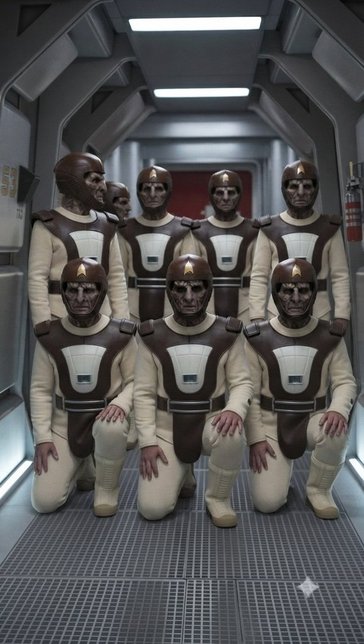 3. The middle faction: “Clones must be volunteers.”
They propose:
- Clones are created with full rights.
- They choose their own careers.
- They are not obligated to serve in Starfleet.
This solves nothing, because:
- Why create soldiers who might refuse to fight?
- Why create people at all for a predetermined social role?
- Why create thousands of identical individuals with identical childhoods?
The Federation ends up debating whether identity itself can be mass-produced ethically.
The military perspective: Starfleet hates the idea
Starfleet officers — especially those on the frontier — would oppose clone soldiers for three reasons:
- Autonomy — Starfleet culture is built on initiative, creativity, and moral judgment.
- Command responsibility — ordering clones into danger feels like ordering children into danger.
- Historical trauma — the Eugenics Wars left deep scars.
Starfleet wants better officers, not manufactured ones.
The philosophical core: What is a person?
The Arcturian debate forces the Federation to confront the same questions raised by:
- Data
- Lal
- The EMH
- The Exocomps
- The Deltan emotional-identity debates you’ve explored
- The Ch’ramaki and Terajuni refugee personhood crisis
If clones are persons, then:
- They must have rights.
- They must have freedom of movement.
- They must be allowed to refuse military service.
- They must be allowed to reproduce.
- They must be allowed to leave the Federation.
Which means the Federation would be creating a new minority population with no cultural heritage except the trauma of being manufactured.
The political fallout
Klingon Empire
The Klingons would see clone soldiers as:
- cowardice (“You breed warriors because you cannot raise them.”)
- dishonour (“A warrior must choose battle.”)
- a threat (“The Federation can grow armies overnight.”)
This destabilises the Khitomer peace.
Romulan Star Empire
The Romulans would quietly applaud — and then weaponise the scandal:
- “The Federation claims moral superiority while breeding slaves.”
- “Your humanitarian rhetoric is a lie.”
Member worlds
Different worlds react differently:
- Vulcan — rejects clones as illogical and ethically compromised.
- Andor — sees them as dishonourable but potentially useful.
- Earth — erupts in political protest.
- Rigel — treats clones as a labour force, sparking rights movements.
- Delta IV — sees clone identity as a psychological atrocity.
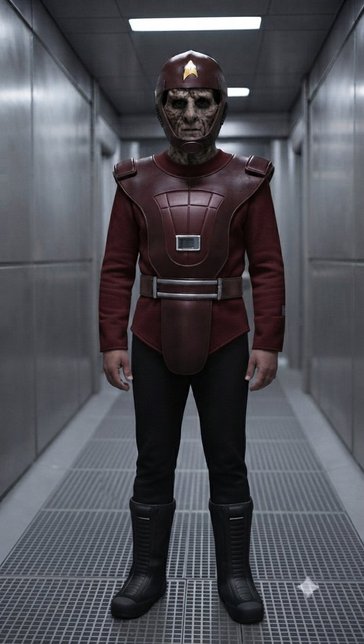 Clones destabilize the Federation’s entire social contract.
The Federation works because:
- citizens choose their paths
- cultures evolve organically
- diversity is natural, not engineered
- individuals have histories, families, and communities
Clones break all of this.
They are:
- identical
- rootless
- manufactured
- socially predetermined
- created for a purpose they did not choose
They force the Federation to confront whether its ideals are universal — or only apply to “naturally born” people.
Final synthesis
The Arcturian clone program is the Federation’s mirror universe moment:
a glimpse of what it becomes when fear overrides ethics.
If the clones are persons, the Federation has committed a moral crime.
If the clones are not persons, the Federation has committed a scientific crime.
If the clones are soldiers, the Federation has committed a political crime.
The only ethical path is to abolish the program — and grant full rights to any clones already created.
The Bottom Line:
Breeding cloned armies is unethical and the Federation would NEVER accept a Jem Hadar program for soldiers. They'd be depersonalised and expendable. Treated as non-life. This is against IDIC and Star Trek and therefore I'm NOT doing the TMP version.



